Marketing
40 Minute

There is a moment every year when the tech world seems to wake up and move forward all at once.
It is not a single event, a trade show or even a specific date on the calendar. It is more of an atmosphere.
It is called Techtember, a combination of tech and September, a term used to describe the early autumn period when product launches, keynote presentations and emerging technology trends come together in an unusually concentrated way.
September has always been a month of new beginnings. In the technology industry, this is even more noticeable: companies return from the summer ready to unveil what they have been working on, while audiences are eager to discover what comes next.
That is why Techtember 2026 is more than a period of excitement for technology enthusiasts. It offers a valuable opportunity to understand where the digital world is heading.
And 2026 has already given us plenty to explore.
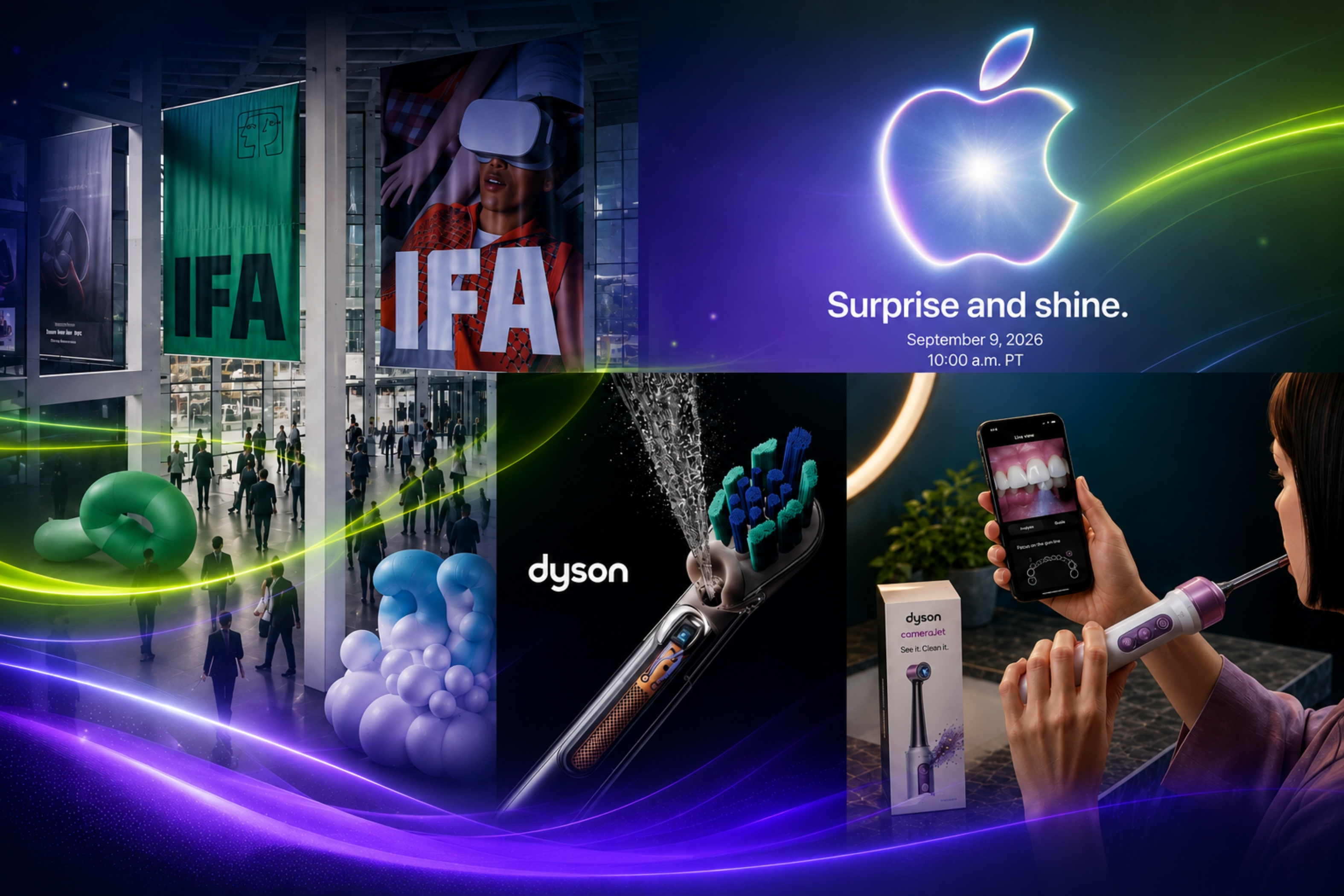
From September 4 to 8, Berlin once again became one of Europe’s leading centres for consumer technology with IFA Berlin 2026.
The event brought together established brands, startups and innovators to showcase how technology is increasingly becoming part of everyday life.
Smart homes, robotics, mobility, connectivity and artificial intelligence were among the key areas of interest, all connected by a common theme: making technology more useful, accessible and integrated into daily routines.
At IFA, technology is no longer presented simply as something futuristic to admire from a distance.
It is becoming part of our homes, cars, wearable devices and everyday activities.
The boundary between a technological device and a daily habit is becoming increasingly blurred.
Companies such as Acer have also used events like IFA to communicate their evolution beyond traditional computing, exploring opportunities in artificial intelligence, digital services and connected living.
The real message is clear: innovation is no longer defined only by what technology can do, but by how naturally it fits into people’s lives.
Before turning to Apple’s highly anticipated event, it is worth considering why Techtember has become such an important moment for the industry.
September is not a random choice for technology companies.
It is a period when many manufacturers compete for attention, introduce new products and position themselves within the wider technology conversation.
An interesting example from 2026 comes from Dyson.
On September 1, the company introduced CameraJet in Paris, its first electric toothbrush featuring an integrated camera and AI-powered precision cleaning technology.
The system uses machine learning to identify spaces between teeth and activate a targeted mouthwash jet in less than 100 milliseconds.
What makes this product particularly interesting is not simply its unusual functionality.
It represents a broader technological trend: embedded AI.
Artificial intelligence is increasingly moving directly into physical devices, allowing them to process information and perform intelligent functions without relying entirely on external cloud infrastructure.
It is a significant development for a company historically associated with vacuum cleaners and household appliances.
And Dyson was certainly not alone in attracting attention during September.
Smartphone manufacturers such as Huawei, Xiaomi, vivo and Oppo also competed for visibility with new products and announcements during the same period.
The result is a highly concentrated launch season in which brands are not simply introducing products. They are competing to shape the conversation about the future of technology.
On September 9, attention shifted to Cupertino for Apple’s annual autumn keynote, titled “Surprise and shine.”
This year’s event carried additional significance.
It was the first major September product presentation under John Ternus, who became Apple’s CEO on September 1, 2026, following the leadership transition from Tim Cook, now Executive Chairman.
Ternus brought an extensive hardware engineering background to the role, making the event particularly interesting for anyone following Apple’s long-term technological direction.
The announcements included the iPhone 18 Pro and iPhone 18 Pro Max, alongside the introduction of iPhone Duo, Apple’s first foldable iPhone.
Beyond individual products, the most interesting development for digital professionals is how artificial intelligence, advanced processors, computational photography and software increasingly work together to create a unified user experience.
Apple continues to demonstrate the importance of building an ecosystem rather than focusing on isolated features.
And understanding that approach offers valuable insights into the direction of the wider technology industry.
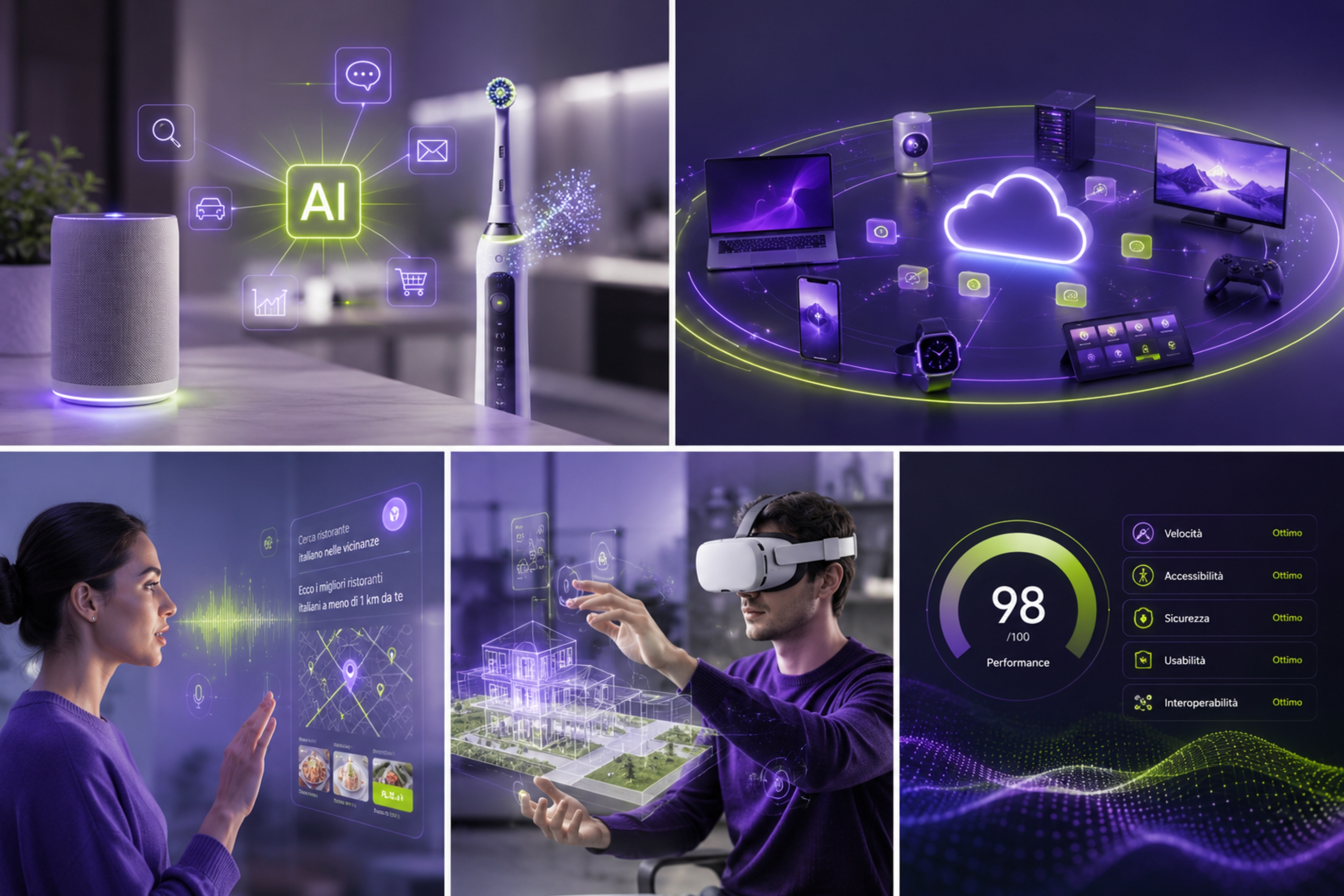
Beyond individual events, Techtember 2026 offers an opportunity to identify the technological developments that will continue to influence businesses and digital experiences.
Here are five major trends worth watching.
The era of artificial intelligence as a standalone feature is gradually evolving.
A separate chatbot or an application with AI added as an optional function is no longer the only model.
Artificial intelligence is increasingly being integrated directly into software, search engines, physical devices and digital services.
In many cases, it becomes almost invisible to the user.
Dyson’s CameraJet is an unusual but effective example of how deeply this integration can extend into everyday products.
For businesses, this represents an important change in perspective.
The question is no longer simply:
“How can we use artificial intelligence?”
A more strategic question is:
“What better experience can we create through artificial intelligence?”
This shift affects software development, UX design, digital content and business strategy.
The goal is not to introduce AI for the sake of innovation, but to use it to solve real problems and create measurable value.
Technical specifications still matter, but they are no longer enough to define a great digital product.
What increasingly makes the difference is how effectively processors, operating systems, applications, cloud services and AI technologies work together.
This principle also applies to companies developing digital platforms.
Instead of thinking about isolated products, businesses should start designing connected ecosystems.
Websites, applications, databases, services and interfaces need to communicate efficiently while maintaining a simple, fast and consistent user experience.
The most successful digital ecosystems are often those in which the underlying complexity remains invisible to users.
Voice commands, gestures, natural language interactions and multimodal experiences are gradually changing the way people interact with technology.
Traditional interfaces, including keyboards and mice, are not disappearing.
However, they are increasingly complemented by more intuitive interaction methods.
Users are beginning to expect technology to understand their intentions rather than requiring them to learn complex systems.
This represents a major opportunity for UX and UI design.
A well-designed interface should reduce friction, anticipate user needs and make interactions feel natural.
In this context, user experience becomes a strategic business advantage, not simply an aesthetic consideration.
Augmented reality, virtual reality, spatial computing and three-dimensional content are no longer limited to gaming and entertainment.
These technologies are opening new possibilities across several industries, including:
The most important shift concerns the type of experience businesses can provide.
Instead of asking:
“What can we show our customers?”
Companies are increasingly asking:
“What can we let our customers experience?”
Immersive technologies allow users to explore products, environments and information in more interactive ways.
For brands, this creates opportunities to improve engagement, simplify complex information and offer memorable digital experiences.
This may be the least spectacular trend, but it is arguably one of the most important.
Performance, speed, accessibility, personalisation, security and interoperability remain essential to the success of any digital product.
Even the most advanced technology cannot deliver value if the website is slow, the interface is confusing or the service is difficult to use.
Innovation should therefore be evaluated through the quality of the experience it creates.
A successful digital transformation is not simply about adopting new technology.
It is about turning that technology into an experience that works reliably, efficiently and intuitively.
And this is where strategy, design and development must work together.
Not every company needs to follow every new product launched in Berlin or Cupertino.
In fact, doing so can often lead to unnecessary investments and fragmented digital strategies.
The real value of Techtember 2026 lies in understanding which innovations represent temporary hype and which are likely to influence the way digital products and services are designed.
Rather than treating September as a list of technologies to adopt, businesses should use it as an opportunity to ask themselves some important questions:
These are not questions for IT departments alone.
They involve marketing, design, development, communication and business strategy.
Successful innovation happens when these different disciplines work together towards a common goal.
Not Just a Month of Products, but a Month of New Directions
Techtember should not be viewed simply as a parade of new devices.
It offers a snapshot of how technology is changing both the way we design digital products and the way people experience them.
Artificial intelligence is becoming more widespread and less visible.
Interfaces are becoming more intuitive and adaptive.
Immersive experiences are expanding beyond traditional screens.
Hardware and software are becoming increasingly connected.
And user experience continues to determine whether technological innovation delivers meaningful results.
For companies, the real challenge is not keeping up with every announcement.
It is understanding which changes deserve a place in their digital strategy.
Because technology will continue to evolve.
The difference lies in how effectively businesses turn that evolution into opportunity.
Techtember 2026 highlighted how quickly the technology landscape is evolving, but also reinforced an important principle: innovation only creates value when it improves real experiences.
From artificial intelligence to immersive technologies, from connected ecosystems to more natural interfaces, the opportunities for businesses are significant.
However, successful digital transformation requires more than adopting the latest tools.
It requires a clear strategy, technical expertise and a strong understanding of user needs.
Want to understand how the technologies highlighted during Techtember can create real opportunities for your digital project?
Contact Pixsmart Tech Lab and discover how we can shape the next evolution of your digital experience together.
Techtember is a term formed by combining “tech” and “September”. It refers to the period when major technology companies concentrate product launches, keynote presentations, industry events and announcements.
It is also a useful opportunity to observe emerging technology trends and understand which innovations may influence the digital industry in the months ahead.
Some of the most important technology trends in 2026 include the deeper integration of artificial intelligence into software and devices, connected hardware-software ecosystems, natural language interfaces, immersive 3D and XR experiences, and increasing attention to performance, accessibility, security and interoperability.
September traditionally brings together major international technology events and product announcements.
IFA Berlin, Apple’s annual keynote and launches from other technology manufacturers make it an important period for identifying emerging innovations and understanding which technologies are moving towards broader adoption.
Artificial intelligence is evolving from a standalone functionality into an integrated component of digital experiences.
It can support processes, interfaces, personalisation and intelligent device features.
For businesses, the challenge is to design products and services in which AI delivers a clear and practical benefit to users.
Artificial intelligence, natural interfaces, XR technologies, platform integration and connected digital ecosystems can all have practical business applications.
However, companies should not adopt every new technology simply because it is trending.
The priority should be identifying solutions that improve processes, services and customer experiences while supporting long-term business objectives.


